

RaDAR Research News
At Summit 2025 on November 20th, we presented a number of RaDAR projects that were recently completed and others in progress. To view these presentations, be sure to check out the online Summit archive when it becomes available in February.
A RaDAR study with three related projects is underway funded by a Saskatchewan Health Research Foundation Establishment Grant. The study aim is to identify opportunities to improve the readiness of rural primary care organizations to delivery high quality dementia care in Saskatchewan. The team includes Julie Kosteniuk, Allison Cammer, Megan O’Connell, Debra Morgan, Dallas Seitz, Andrew Kirk, Beliz Açan Osman, Chandima Karunanayake, PhD student Erin Leeder, and patient partners Merle Wiley, Carolee Zorn, and Dana Klapak.
- In partnership with the Saskatchewan Health Quality Council, we are using health administrative data to investigate the association between rurality and dementia detection in community-dwelling and long-term care populations in Saskatchewan. HQC senior researcher Beliz Acan Osman has created cohorts of persons with incident and prevalent dementia for each year from 2014 to 2024. Our next steps are to examine rural-urban and intra-rural variations within these cohorts.
- Data collection for the provincial survey, Collaborations and Resources for Dementia in Saskatchewan Primary Care, is now complete. The survey focused on collaborations among primary care professionals and with specialists. We also examined the use of resources and tools for dementia diagnosis and management, and respondents’ dementia care knowledge, attitudes, and practice. A total of 232 family physicians and nurse practitioners responded. Overall findings were presented at the Canadian Conference on Dementia (October 2025). Our next steps are to compare collaborations and resources between rural and urban respondents. This coming summer, an undergraduate nutrition student will conduct a qualitative analysis of benefits, barriers, and facilitators to collaborations.
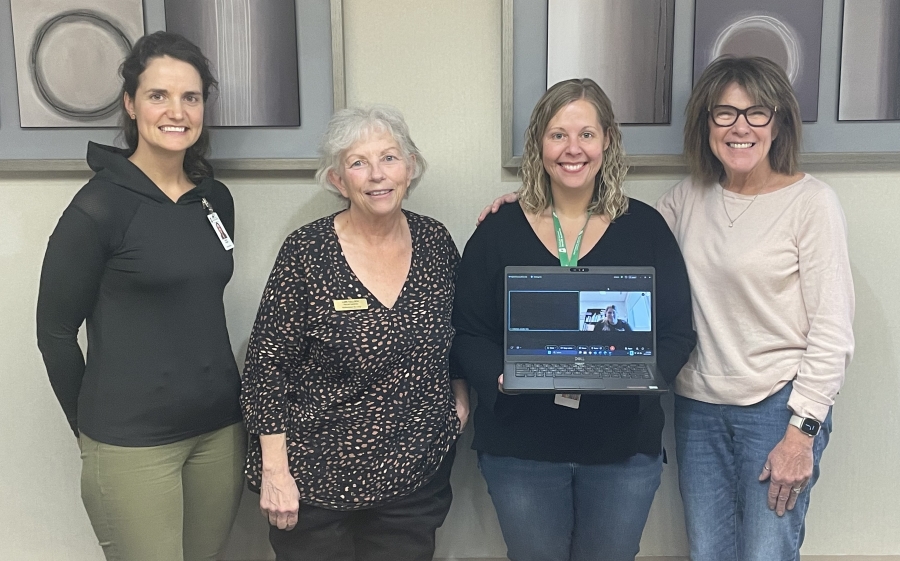
- The clinic-based RaDAR primary care memory clinic model into a Hybrid Rural Primary Care Memory Clinic Model. The study aim is to evaluate the feasibility, acceptability, and sustainability of a hybrid model that involves virtual participation by an occupational therapist. In Phase 1, a new hybrid primary care memory clinic was established for Fillmore, SK, drawing on members of the existing Weyburn team. The new team has met several times to develop a hybrid process whereby the occupational therapist conducts an in-person pre-assessment and joins the team virtually on clinic day. We are now in Phase 2, and the team has held one memory clinic to date. The team will continue to hold memory clinics in the coming months and make iterative modifications as we evaluate feasibility, acceptability, and sustainability from the perspective of team members, patients, and caregivers.